

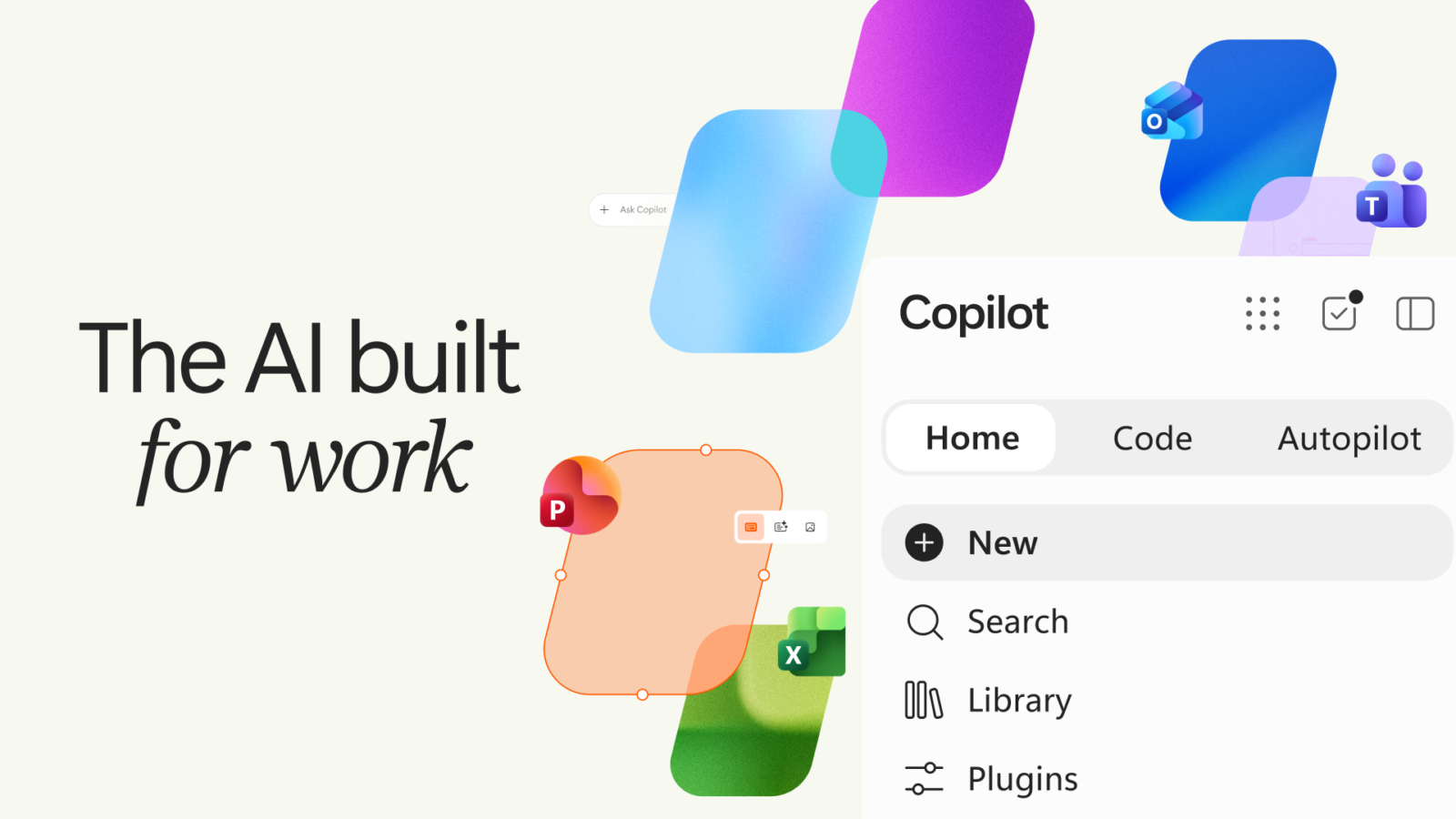
Microsoft wants Copilot to stop behaving like a chatbot you visit and start acting more like a colleague that keeps working after you log off. The company’s latest Copilot redesign splits the experience into three areas: Home, Code and Autopilot. Together they signal a clear shift from answering prompts toward handling ongoing work.
Autopilot is the most ambitious piece. It’s a rebrand of Scout, the personal-agent project Microsoft introduced in June on top of the open-source OpenClaw framework. Users give it a role and an objective, and it runs with its own identity, memory and workspace inside a company’s Microsoft 365 environment. Microsoft says it can follow conversations, chase updates and pick a project back up days later. Colleagues can reach it through Teams, Outlook or documents by tagging it like any other coworker. In a staged retail demo, an agent spotted a shipping problem affecting 18 stores and pulled the right people together to fix it. That’s a polished showcase rather than evidence of how reliably Autopilot handles messy real-world deployments. Microsoft hasn’t fully explained how approvals or failed actions are handled either.
Home merges quick chat with Cowork’s longer delegated tasks. It also brings Word, PowerPoint and Excel editing directly into Copilot, with changes synced to the same files colleagues are working on in the standalone apps. The timing isn’t subtle. Anthropic folded Cowork into Claude chat and added document and slide tools just nine days earlier. Microsoft’s pitch rests on something rivals can’t easily copy: decades of Office files, business systems and admin policies already sitting inside customer organisations.
Code lets non-developers describe an app, dashboard or automation and have Copilot build it, using technology shared with GitHub Copilot. It expands on last year’s App Builder, which blocked external API calls and hid generated code. The new Copilot Managed Runtime supports editable code, Git versioning and an SDK for outside tools, with Microsoft handling the hosting.
The weakest part of the announcement is cost. Autopilot, Cowork and Code all fall under usage-based billing, but Microsoft hasn’t published rates for any of them. The only reference point is Cowork’s existing charge of $0.01 per Copilot Credit, and a single task can consume many credits depending on the model, tools and runtime involved. Microsoft 365 Copilot remains $30 per user per month, and the E7 bundle costs $99, but neither covers unlimited agent work. New spending controls keep metered services switched off until admins set policies, which is sensible but also a quiet admission that bills could climb.
Rollouts to Microsoft’s Frontier programme start this month, with broader access staggered through the rest of 2026. The real question is whether enterprises will hand over more autonomy before they know what it costs.